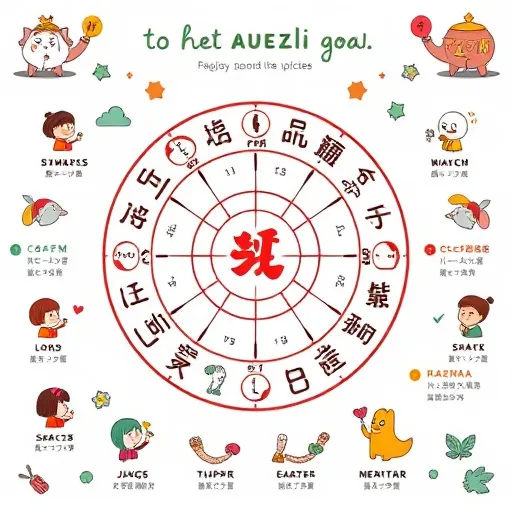
Bazi reading explain
What Exactly Is Bazi Reading?
So what exactly is a bazi reading? At its heart, bazi — which literally means "eight characters" — is a system that takes your birth information and maps it into four pillars, each one made up of a heavenly stem and an earthly branch. Those eight characters together form what practitioners call the Four Pillars of Destiny. A bazi reading is simply the interpretation of that chart — your personal map, decoded.
Think of a bazi reading as a personality blueprint crossed with a timing manual. The chart doesn't hand you a fixed, predestined future. Instead, it highlights tendencies, elemental balance, and cyclical patterns that can shape how you approach relationships, career moves, health routines, and big life decisions. That's the real value of a bazi reading — it's a lens, not a verdict.
What makes bazi reading so compelling in 2026 is that it's no longer confined to older generations or specific cultural circles. Younger audiences — especially those drawn to self-discovery, personal development, and holistic wellness — are fueling a full-blown resurgence. The practice has been repackaged for a digital-first world, with instant chart calculations, AI-assisted interpretations, and lively community discussions happening across every major platform. A bazi reading today is as likely to happen on your phone as in a traditional consultation room.
The Four Pillars of Destiny: Year, Month, Day, and Hour Breakdown
Before going deeper, it helps to understand the structure behind any bazi reading. Each pillar represents a different life domain:
- Year Pillar — Ancestry, early environment, and the broader social context you grew up in.
- Month Pillar — Career, parents, and your relationship with authority and structure.
- Day Pillar — The self and the spouse or partner. The day stem, known as the Day Master, is often considered the core of your identity.
- Hour Pillar — Children, inner aspirations, and the later chapters of life.
Each of these pillars carries one of the Five Elements — Wood, Fire, Earth, Metal, and Water. The interaction between these elements, along with the balance of yin and yang, forms the backbone of any bazi reading.
Why the Five Elements and Yin Yang Balance Matter So Much
Here's where a bazi reading gets really interesting. The Five Elements aren't just abstract concepts — they're a framework for understanding how energy moves and transforms. In bazi analysis, the goal is to identify which elements are strong, which are weak, and which ones need support. A chart heavy on Fire but light on Water might suggest a personality that's passionate and expressive but could benefit from more reflection and rest. That's the kind of nuance a good bazi reading teases out.
Practitioners use terms like favorable elements and unfavorable elements to describe which energies support a person's chart and which ones create friction. This isn't about labeling things as "good" or "bad" — it's about understanding where the currents flow smoothly and where you might need to paddle a little harder. A bazi reading doesn't judge; it navigates.
How a Bazi Reading Is Actually Done: From Birth Data to Ten Gods Analysis
The process behind a bazi reading starts with your birth date and time — ideally down to the hour. From there, a practitioner (or an online tool) converts that information into the Chinese solar calendar and generates your chart. Once the chart is set, the bazi reading unfolds in layers:
- Elemental balance assessment — Which elements dominate? Which are missing or weak?
- Day Master analysis — The day stem represents your core self. Is it strong or weak? What does it need to thrive?
- Ten Gods interpretation — A set of relational archetypes describing how different elements interact with your Day Master, mapping to concepts like wealth, influence, creativity, and support.
- Luck pillar review — Long-term cycles, usually ten-year periods, that show how your chart's energy shifts over time.
- Annual analysis — Year-by-year influences that highlight specific opportunities or challenges.
In 2026, plenty of people are pairing a traditional bazi reading with modern tools like data visualization and AI-powered interpretation. This doesn't replace the human element — experienced practitioners still bring nuance and intuition that algorithms can't replicate — but it does make the practice way more accessible to beginners curious about their first bazi reading.
The Growing Popularity of Bazi Reading in 2026: Meaning, Personalization, and Wellness
So why is bazi reading having such a moment right now? A few factors are converging. Global uncertainty — economic shifts, rapid technological change, evolving social norms — has pushed many people to look for frameworks that help them make sense of their lives. A bazi reading offers a structured, symbolically rich way to explore questions like: Why do I keep hitting the same wall? What's my natural advantage? When should I make a big move? It's not fortune-telling in the crystal-ball sense — it's pattern recognition, and that's something the human brain craves.
We also live in an era of hyper-personalization. From curated feeds to customized health plans, people expect information tailored to them, and a bazi reading fits neatly into that expectation. Your chart is uniquely yours — no two are exactly alike. That sense of individuality resonates with modern audiences tired of one-size-fits-all advice.
There's a cultural rediscovery happening too. Younger generations, particularly those with East Asian heritage, are reconnecting with traditional practices their parents or grandparents may have set aside. Bazi reading, feng shui, Chinese astrology, and traditional Chinese medicine are all part of this renaissance, and digital platforms have made these practices more accessible than ever.
Perhaps the most significant shift in 2026 is how bazi reading is being integrated into life coaching, wellness routines, and even career counseling. Practitioners frame bazi as a tool for self-awareness rather than fatalism. A bazi reading might inform decisions about timing a job change, choosing a business partner, or understanding relationship dynamics — all presented as guidance, not decree.
Common Misconceptions About Bazi Reading and Destiny Analysis
Let's clear a few things up, because misconceptions about bazi reading abound. First, bazi doesn't tell you exactly what will happen — a chart describes tendencies and influences, not a fixed script, and free will always plays a role. Second, it's not purely superstition; while it isn't a science in the Western sense, bazi is a sophisticated symbolic system with thousands of years of development, and many people use a bazi reading as a reflective tool rather than a predictive one. Third, you don't need a master to read your chart — the fundamentals of bazi reading can be learned by anyone with patience and curiosity. And finally, a good bazi reading focuses just as much on understanding the present — your personality, tendencies, and relational patterns — as it does on future cycles.
Getting Started with Your Own Bazi Reading: Birth Data, Chart Generation, and Interpretation
Interested in exploring your own chart? Start by gathering your birth information — date, time, and location. The time matters because it determines the hour pillar, and if you don't know your exact birth time, some practitioners offer rectification techniques to estimate it. Next, generate your chart using one of the many online tools that convert birth data into a bazi chart; look for ones that clearly show the heavenly stems, earthly branches, and elemental breakdown, ideally with interactive dashboards that visualize everything in real time.
Then learn the basics before diving into a full interpretation — get comfortable with the Five Elements, yin and yang, the Day Master, and the Ten Gods. Understanding these building blocks will make your bazi reading far more meaningful. Finally, seek interpretation — consult an experienced practitioner, try an AI-assisted tool, or join a community of learners. The key is to approach your bazi reading with curiosity rather than anxiety. Think of it as a conversation with a wise friend, not a verdict from a judge.
Luck Pillars, Annual Cycles, and the Role of Timing in Bazi Reading
One of the most practical aspects of bazi reading is its focus on timing. The luck pillars — also called da yun — are ten-year cycles describing how your chart's energy evolves over time, and within each luck pillar, annual cycles add another layer of detail. In 2026, we're in a period where many people are re-evaluating their life paths — career shifts, relocation, relationship changes — and a bazi reading offers a framework for understanding when to act and when to wait. It's not about passive acceptance; it's about strategic patience and informed decision-making.
For example, if your chart shows a strong wealth element activating during a particular annual cycle, you might feel more confident pursuing a financial opportunity. Conversely, if a cycle emphasizes self-cultivation, it might be a better time to invest in learning rather than launching. That's the strategic edge a bazi reading can provide.
Bazi Reading and Personal Growth: Self-Awareness Through Elemental Insight
Here's the thing that often gets lost in discussions about bazi reading: it's ultimately a tool for personal growth. The chart doesn't change who you are — it illuminates aspects of yourself you might not have fully seen. Maybe you've always wondered why you feel drained in certain environments. A bazi reading might explain that your chart is yin-dominant and needs more quiet, restorative spaces. Maybe you've struggled with assertiveness; a reading might reveal that your Day Master is a soft element like Yin Wood, and that your growth path involves leaning into structure and boundaries. This kind of insight can be transformative — not because it tells you what to do, but because it gives you language and context for what you're already experiencing.
What to Look for in a Bazi Practitioner and How Bazi Compares to Western Astrology
If you're considering a professional bazi reading, look for clarity — a good practitioner explains concepts in plain language, not jargon. Look for balance, meaning they emphasize strengths and challenges rather than just doom or gloom. Look for ethical framing, where bazi is presented as guidance rather than absolute prediction, with no fear-based selling. And look for experience with modern contexts — careers, relationships, mental health — not just traditional scenarios. In 2026, many practitioners operate online, offering video consultations and written reports, which has made bazi reading more accessible to a global audience.
People often ask how bazi reading compares to Western astrology or other divination systems. The honest answer: they're different languages describing similar human experiences. Western astrology uses planets and houses, bazi uses elements and stems, and numerology uses numbers. What sets bazi reading apart is its emphasis on elemental balance and cyclical timing — it's less about personality archetypes and more about dynamic energy flow, which is why many people find it especially useful for decision-making around timing and strategy.
Whether you're a curious beginner or someone who's been studying the Four Pillars of Destiny for years, a bazi reading invites you to look deeper — not just at your chart, but at yourself. So go ahead: pull up your birth information, generate your chart, and start asking questions. You might be surprised by what your bazi reading reveals — not because the stars have secrets to tell, but because your own story is more layered and fascinating than you ever realized.